
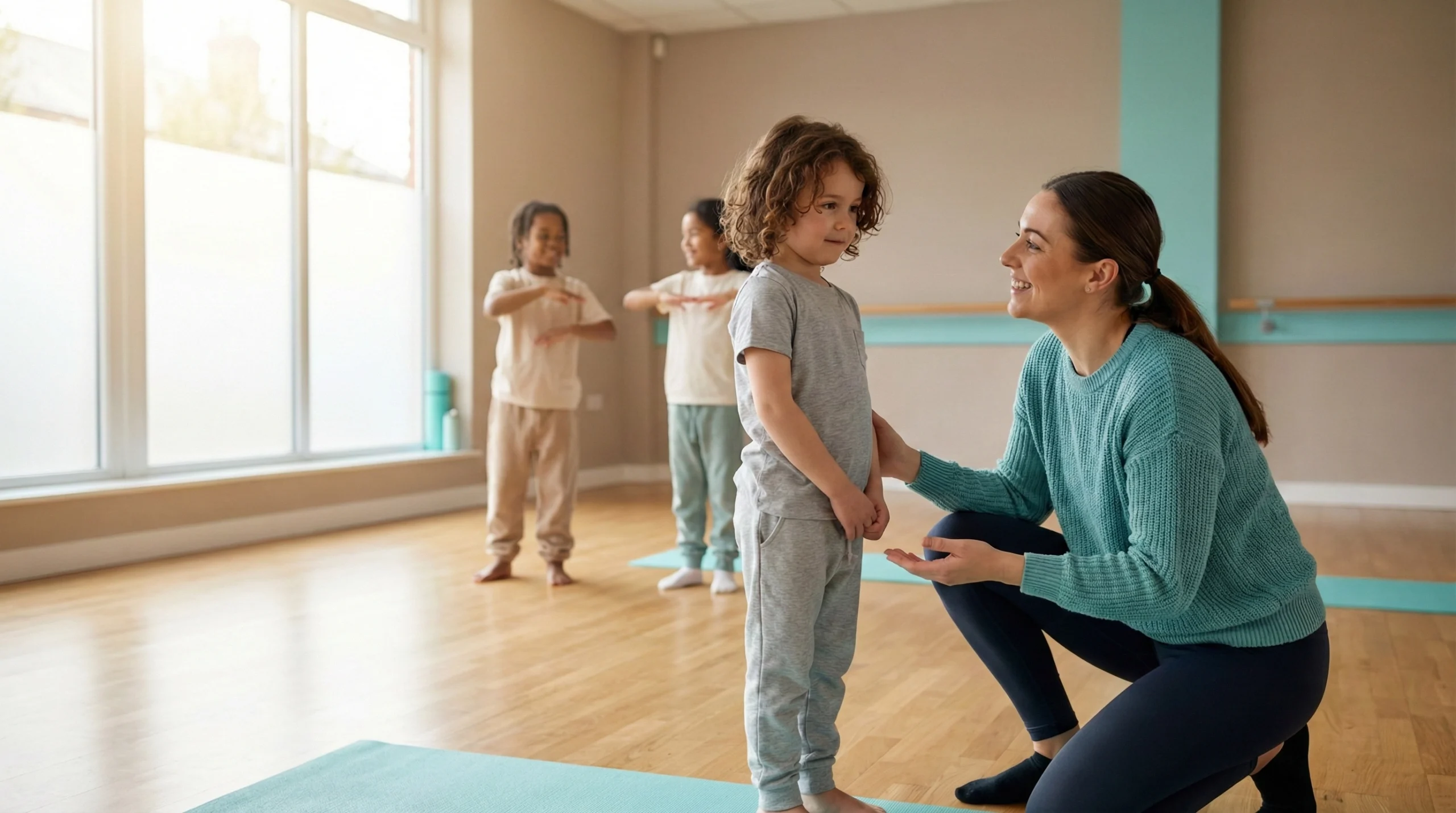
The Anxious Child Solution
A practical, research informed guide on how the performing arts, including dance, drama, musical theatre, acro and aerial, can support anxious children through movement, routine, belonging, and confidence building.
Introduction to the modern epidemic of childhood anxiety
Anxiety in children is not misbehaviour, stubbornness, or defiance. In many cases it is a physiological stress response, the child is overwhelmed, not unwilling.
In today’s educational and social landscape, children and adolescents face complex pressures, including digital socialisation, peer comparison, and wider instability. Anxiety disorders in young people now show up in multiple forms, including generalised anxiety, social anxiety, performance anxiety, and selective mutism.
Social anxiety is often an intense fear of being observed, evaluated, and judged, which can block everyday participation, friendship building, and extracurricular involvement. A particularly severe presentation is selective mutism, where a child can speak normally at home but becomes nonverbal in public settings due to a powerful fight, flight, or freeze response.
Capable of speech, often chatty at home, then shuts down or appears paralysed in school or social environments.
Adults speak on the child’s behalf to reduce awkwardness, which can unintentionally reinforce the child’s identity as “the non speaking child”.
Many traditional interventions rely heavily on verbal communication. Performing arts can bypass the immediate demand for speaking, using movement, rhythm, structure, and safe social play to build regulation and confidence over time.
The neurobiological underpinnings of anxiety and movement
Anxiety is closely linked to heightened amygdala activity, the brain’s threat detection system, alongside reduced regulation from areas involved in executive function and down regulation of stress responses. When triggered, stress hormones can produce racing heart, rapid breathing, gastrointestinal discomfort, and muscular tension, and in that state, calm verbal reassurance often does not land.
When a child is in a full stress response, the body is already “doing the fear”. That is why movement based approaches that calm the nervous system can be so effective.
Neurobiological mechanisms and why the arts help
| Neurobiological mechanism | Performing arts catalyst | Psychological outcome for an anxious child |
|---|---|---|
| Amygdala down regulation | Rhythmic movement, deep diaphragmatic breathing, predictable musical structures | Reduced panic symptoms, systematic lowering of fight, flight, freeze response |
| Oxytocin release | Synchronised choreography, ensemble singing, safe partner work | Increased trust, peer bonding, reduced isolation |
| Dopamine modulation | Mastering a new skill, remembering choreography, positive recognition | Higher motivation, reward, and improved mood |
| mPFC activation | Improvisation, character work, spatial awareness and planning | Improved executive function, flexibility, emotional regulation |
Polyvagal theory and co regulation
A useful framework here is the idea that the nervous system can be shifted from defence into social engagement through co regulation. In simple terms, a calm, trained adult helps a dysregulated child feel safe through tone of voice, predictable routines, and attuned nonverbal cues.
- Predictable rhythm and structure
- Warm voice tone, calm presence
- Repeatable routines, clear transitions
Moving in time with music can act as a somatic regulator, it signals safety through rhythm, structure, and repetition.
Synchronised movement supports belonging. For anxious children, belonging is often the missing ingredient.
Modality deep dive, using specific arts for targeted relief
Performing arts are not one thing. Each discipline offers different benefits depending on how anxiety shows up, shyness, fear of speaking, perfectionism, sensory overload, or low confidence.
Dance, non verbal expression, interoception, physical literacy
Dance can be particularly supportive for children who struggle with verbal communication, including selective mutism. It offers expression without forcing speech, and can help a child reconnect with bodily cues over time through posture, alignment, and controlled movement.
Acrobatics, incremental risk and resilience
Acro provides structured progressions that build evidence of capability. When a child masters a skill that once felt impossible, it can create a lasting shift in self belief and resilience, and that carries into school and social life.
Aerial arts, sensory regulation and focus
Aerial work can offer deep proprioceptive input and vestibular engagement. For some children, including neurodivergent children, this can be organising and calming, while also demanding present moment focus that interrupts rumination.
Drama and musical theatre, low stigma exposure and emotional literacy
Drama can act like a low stigma form of exposure practice. Children are seen and heard, but within a character or a structured game, and mistakes are normalised. Over time, this can reduce fear of judgement and build emotional vocabulary.
| Modality | Primary psychological focus | Why it can reduce anxiety | Best fit for |
|---|---|---|---|
| Classical and modern dance | Non verbal expression, interoception | Rhythm regulates the nervous system, mastery supports body confidence | Selective mutism, profound shyness, body image insecurity |
| Acrobatic dance, acro | Risk tolerance, resilience | Incremental progression builds undeniable self efficacy | Fear of failure, perfectionism, low confidence |
| Aerial arts | Sensory regulation, focus | Proprioceptive and vestibular input can soothe, presence disrupts rumination | Neurodivergent children, sensory sensitivities, high stress |
| Drama and musical theatre | Emotional literacy, exposure practice | Role play reduces shame, improv normalises mistakes and judgement fears | Social anxiety, fear of speaking, difficulty expressing emotions |
The Artists in Motion framework, a case study in excellence
Artists in Motion (AIM) School of Dance is based at Intex House, Cooting Road, Aylesham, near Canterbury, Kent. The model below shows how a community studio can operationalise safety, structure, belonging, and progression to support anxious children.
A radically child centred mission and core values
The AIM ethos is framed around building confident, resilient, expressive young people, not just technical dancers. The approach is underpinned by clear values that map closely to what anxious children actually need, compassion, routine, friendship, progress, and psychological safety.
| AIM core value | Pedagogical implementation | Psychological outcome for an anxious child |
|---|---|---|
| Compassion | Patient instruction, supportive teaching, no shouting culture | Lower affective filter, child experiences the studio as safe |
| Friendship | Community events, buddy systems, ensemble work | Reduced isolation, reliable peer network |
| Determination | Encouraging repeated attempts, praising effort | Shift from fixed mindset to growth mindset |
| Growth | Holistic development, imagination, artistry | Confidence grows through capability and expression |
| Excellence | High standards, qualified professionals | Competence builds real self esteem |
| Commitment | Teaching persistence, focus, resilience | Child learns they can cope, even when it is hard |
Age appropriate progression and routine
Predictability reduces anxiety. A structured timetable aligned to developmental readiness makes expectations feel safe and achievable.
| Age bracket | Programme structure examples | Developmental focus, anxiety mitigation |
|---|---|---|
| 18 months to 3 years | Parent and Tot sessions, Melody Movers, Little Groovers, My First Ballet | Imagination, rhythm, play, supported separation through co regulation |
| 3 to 4 years | Preschool options, Budding Ballerinas, Pre School Acro | Gentle independence, early confidence, basic peer interaction |
| 4 to 6 years | Minis, Mini Street, Mini Musical Theatre, Primary Ballet | Follow instructions, friendship building, safe social identity outside home |
| 7 to 10 years | Juniors, Junior Lyrical, Junior Jazz and Tricks | Focus, discipline, self esteem, preparation for wider school pressures |
| 11 to 13 years | Seniors, Senior Street, Intermediate Acro | Expressive release, confidence during early secondary school changes |
| 14 to 18 years | Intermediate pathways, exams and qualifications | Competence, qualifications, real world confidence and direction |
If a parent feels anxious about safety, the child picks it up. Clear safeguarding, consistent routines, and transparent systems reduce stress for the whole family.
Pedagogical strategies for the studio and home
The philosophy of the extended trial
Many anxious children struggle with drop off. A longer, low pressure trial period gives time to acclimatise, build trust with the teacher, and create familiarity with the room, the routine, and the peer group.
Buddy systems and peer mediated support
Pairing a new student with a kind, confident peer reduces social load. A buddy can guide simple things, where to stand, where to put shoes, what comes next, and that “I’m not alone” feeling can be the turning point.
Managing transitions with visual cues
Transitions are often where anxiety spikes. Consistent cues, a short routine, a calm song, a visual schedule, help the child anticipate change, and movement based transitions keep the mind from spiralling.
Play based emotional exploration, drama games
Play is the language of childhood. Structured drama games can build social skills without triggering fear of failure.
| Drama game | How it works | Targeted skill |
|---|---|---|
| Mirror | Pairs silently mirror each other’s movements | Non verbal attunement, eye contact, cooperation |
| Count to 20 | Group counts to 20, if two speak at once, restart | Group awareness, impulse control, subtle cues |
| Bad Day at the Zoo | Act how animals show big emotions | Emotional distancing, expressing feelings safely |
| Mr Angry Man | Draw a personified emotion, then tell it to leave | Externalising anxiety, regaining control |
Parental strategies, reframing nerves and stage fright
Keep goodbyes short and warm, avoid lingering. Avoidance strengthens anxiety. Instead, validate the feeling, then help the child take the small next step.
A simple reframe that helps, the body signs of fear and excitement can feel similar, you can help your child label it as excitement energy.
- Arrive early, stay calm, avoid rushing
- Validate feelings, do not dismiss them
- Keep drop off consistent, short, and confident
- Use grounding tools, breath, 5, 4, 3, 2, 1 senses exercise
- Focus attention on the first step of the routine, not the whole performance
Conclusion
Childhood social anxiety and selective mutism need practical, multi layered support. The performing arts provide structured, supportive environments that build regulation, belonging, confidence, and emotional literacy. Over time, children learn to trust their bodies, rely on peers, and step forward with greater courage.
Performing arts do not only teach a child how to move, they can help a child learn how to live with less fear, through routine, community, and repeated safe wins.