
Dance Insight Report
The Kinetic Synthesis of Urban and Classical Traditions
A definitive analysis of how Street Dance and Pointe technique intersect, and why this fusion is shaping modern choreography and dance training.
Executive Summary
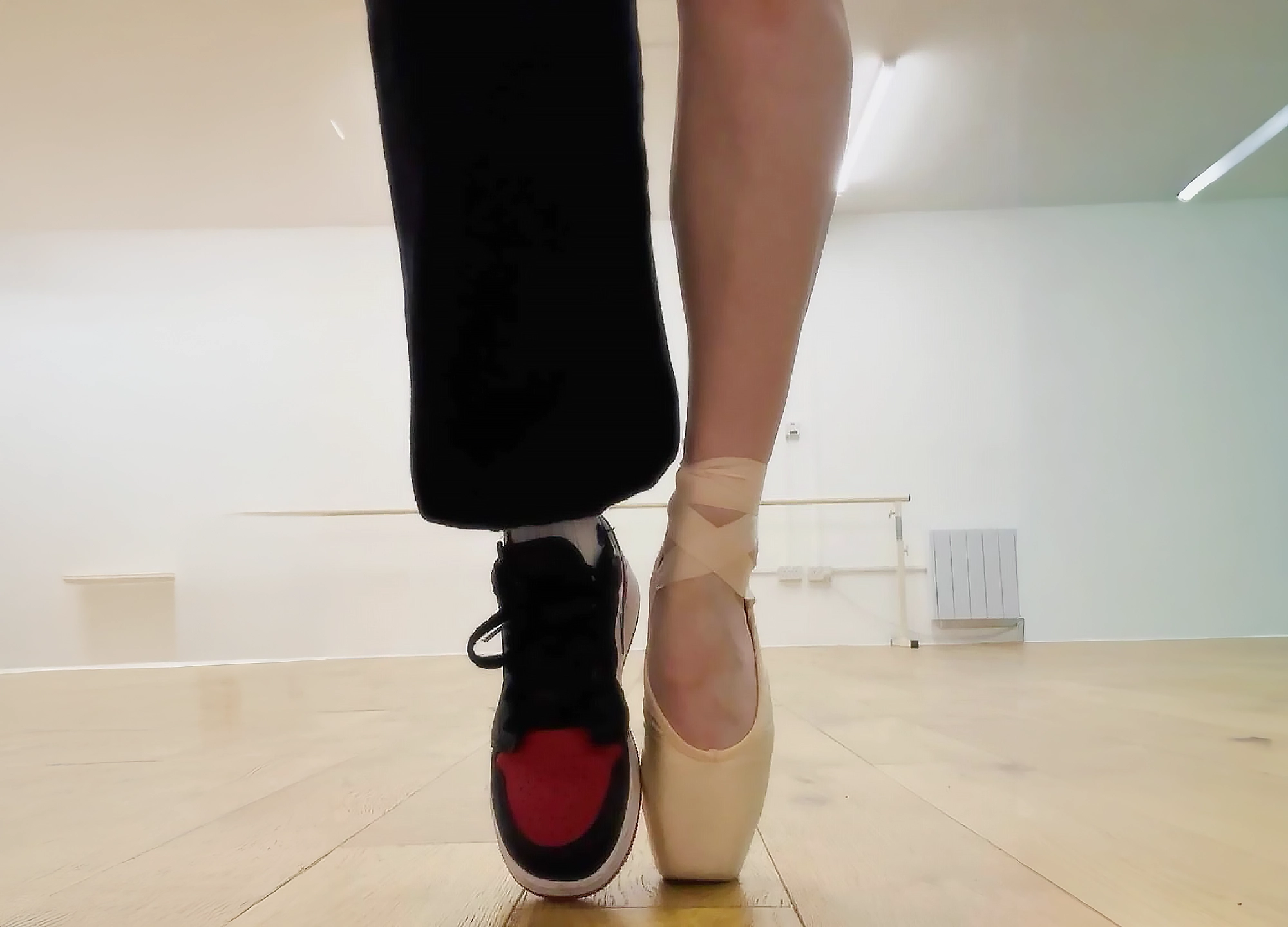
The visual contrast of a high top trainer beside a satin pointe shoe captures a real shift in dance. Ballet’s verticality and street’s grounded rhythm are converging into a new choreographic language. This is not a gimmick, it is a practical evolution in modern training and professional performance.
The Ontological Evolution of Street Dance
Street dance is an umbrella term for social and freestyle based dance styles that emerged outside conservatory systems. Its growth in African American and Latinx communities in the late 20th century represents resistance, identity, and shared joy. Unlike ballet’s court roots and top down technique, street styles spread through parks, clubs, neighbourhood gatherings, and peer exchange.
Translation for parents and students
Street dance is not casual movement, it is a culture of skill development under pressure, built on musicality, athletic control, and real time creativity.
Genealogical Roots of Major Street Disciplines
Core street styles are defined by regional origins and distinct mechanics. Breaking emerged in the South Bronx in the 1970s, built around toprock, footwork, power moves, and freezes. Popping grew from Fresno, using rapid muscle contractions to create robotic and animated illusions. Locking developed in Los Angeles through Don Campbell’s innovations, using rhythmic freezes, character work, and expressive gestures.
The ecosystem expands through styles such as Memphis Jookin’, Waacking, Voguing, Krump, and House, each with its own movement grammar and cultural roots.
| Street Dance Style | Regional Origin | Primary Aesthetic Characteristic | Kinetic Mechanism |
|---|---|---|---|
| Breaking | South Bronx, NY | Athleticism, floor based power | Dynamic weight transfer on hands and head |
| Popping | Fresno, CA | Robotic and animated illusions | Rapid muscle contraction, hits |
| Locking | Los Angeles, CA | Character driven, rhythmic | Structured freezes, locks, points |
| Memphis Jookin’ | Memphis, TN | Fluidity, weightless gliding | Toe stalls and floor slides |
| Waacking | Los Angeles, CA | Glamorous, high speed | Radial arm rotations and dramatic poses |
| Voguing | New York City, NY | Geometric, model like | Linear posing and rhythmic floorwork |
| Krump | Los Angeles, CA | Raw, aggressive expression | Stomps, jabs, explosive chest pops |
| Passinho | Rio de Janeiro, BR | Toe heavy, lightning fast | Rapid hip twists and footwork steps |
The Philosophy of the Street and Battle Culture
The battle is central, a competitive exchange where dancers demonstrate skill, creativity, and personality in real time. Improvisation and individual flavour are prized. Even when street dance moves to theatre stages, it often retains an air of spontaneity that distinguishes it from strictly prescribed ballet choreography.
In street culture, technique is proven under pressure, not just rehearsed in perfect conditions.
The Architecture of Elevation, Pointe Technique
Pointe work is the specialised ballet technique where a dancer supports their body weight on the tips of the toes. The aesthetic is light and ethereal, but the underlying reality is rigorous mechanics, conditioning, and careful shoe engineering.
The Historical Evolution of the Pointe Shoe
- 15th century, Italian Renaissance courts, formal heeled footwear.
- 1730s, shift toward the flat slipper to enable more complex jumps and turns.
- 1830s Romantic era, Marie Taglioni’s early full length work en pointe in La Sylphide.
- Late 19th century, Italian reinforcement of the toe box with early composite materials.
- Early 20th century, Pavlova era innovation that helped define the modern shoe structure.
Physics and Mechanics of Pointe Work
Pointe work defies the natural evolution of the human foot, which was built for walking, not vertical toe balancing. The shoe acts like an external skeleton, distributing load through the toe box and supporting the arch via the shank. Research cited in the document notes forces can reach several times body weight, depending on transitions and impacts.
| Pointe Shoe Part | Material Composition | Primary Mechanical Function |
|---|---|---|
| Toe Box | Burlap, paper, canvas, glue | Rigid platform enabling vertical balance |
| Shank | Stiffened leather or cardboard | Supports the longitudinal arch |
| Vamp | Satin or cotton | Controls depth and alignment within the box |
| Platform | Flattened box tip | Maximises contact surface for stability |
| Ribbons, Elastic | Satin or nylon | Secures the shoe, reduces slipping risk |
Key safety concept
Alignment matters. The body line from hip through knee, ankle, and toe joints needs to stack correctly to reduce injury risk.
The Convergence, Where Street Dance Meets Pointe
The fusion of street and pointe is a dialogue between grounded rhythm and vertical precision. It is not simply mixing steps, it is merging philosophies and training outcomes.
Case study, Hiplet
Hiplet blends classical pointe technique with hip hop, jazz, and African dance. It was developed to keep students engaged in classical training while expanding representation, audience interaction, and stylistic freedom.
Why it matters, it broadens who ballet speaks to, and who ballet is for.
Case study, Lil Buck and Memphis Jookin’
Jookin’ is toe heavy and frequently described as street ballet, due to its flow, glide mechanics, and weightless illusion. Performances like Lil Buck’s interpretation of classical music illustrate how street technique can embody classical phrasing.
Why it matters, it proves technical parallels at a professional level.
Theatre and global spectacle
Choreographers and productions have increasingly staged street ballet fusion for mass audiences, combining theatre narrative, classical scores, and street mechanics, often with modern technology and staging.
Why it matters, this is now mainstream choreography, not a niche experiment.
Technical and Biomechanical Overlaps
Kinetic commonalities
- Core stability, fouettés and freezes both demand a controlled centre of mass.
- Isolations, popping, locking, and ballet precision share independent body control.
- Athletic power, grand jetés and power moves both require explosive recruitment and joint stability.
Benefits of cross training
The document argues that cross training supports injury prevention, versatility, neuromuscular coordination, and mental wellbeing, especially where one style’s constraints are balanced by the other’s freedoms.
| Cross Training Benefit | Ballet Impact | Street Dance Impact |
|---|---|---|
| Muscle balance | Corrects overuse of external rotators | Strengthens stabilisers for floorwork |
| Power output | Supports jump height development | Enhances explosive hits and locks |
| Endurance | Improves cardiovascular capacity | Sustains longer freestyle sets |
| Flexibility | Deepens active range of motion | Refines lines in power freezes |
| Coordination | Sharpens rhythmic accuracy | Improves transitions between levels |
Socio Cultural Impact
The document links this fusion to broader conversations about class, race, and representation in the arts. Ballet has historically been framed as high art tied to wealth and Eurocentric norms, while street dance was often dismissed. By placing hip hop on concert stages and bringing classical technique into urban language, the hierarchy is challenged and rebalanced.
Practical takeaway
Modern audiences want authenticity and excellence together. Fusion gives both, without forcing dancers to shrink into one identity.
Mainstream media, including dance films, has also popularised the hybrid dancer narrative, making cross pollination more normal, even if the deeper complexities can be simplified in entertainment.
Future Horizons, 2025 to 2026 Landscape
AI assisted choreography
AI tools are increasingly used to generate new movement patterns that blend genres, offering fresh hybrid combinations.
Virtual training and battles
Virtual spaces and global exchange make collaboration easier, with dancers training and competing beyond geography.
Engineering, feedback, safety
Sensor based footwear concepts are discussed as a way to provide alignment feedback, especially relevant where high impact street mechanics meet pointe technique.
The new dancer
The report frames the modern dancer as adaptable, purpose driven, and willing to blend styles to express identity, community, and meaning, not just technical mastery.
Conclusion and Strategic Recommendations
The intersection of street dance and pointe work has matured into a legitimate, technically demanding, and culturally significant genre. The report argues that competitive training now rewards dancers who can move between grounded percussion and vertical precision.
Summary of insights
- Mechanical symmetry, core strength, isolation, and rhythmic precision underpin both styles.
- Cultural democratisation, fusion challenges exclusionary norms and expands representation.
- Pedagogical evolution, cross training supports injury prevention, power output, and artistic range.
Recommendations for stakeholders
- Curriculum integration, combine street and classical training for multi lingual dancers.
- Technological adoption, use wearable feedback and smart training tools where appropriate.
- Inclusive casting, broaden representation in body types, skin tone matching attire, and access.
- Digital engagement, use short form platforms for authentic, purpose led storytelling.