
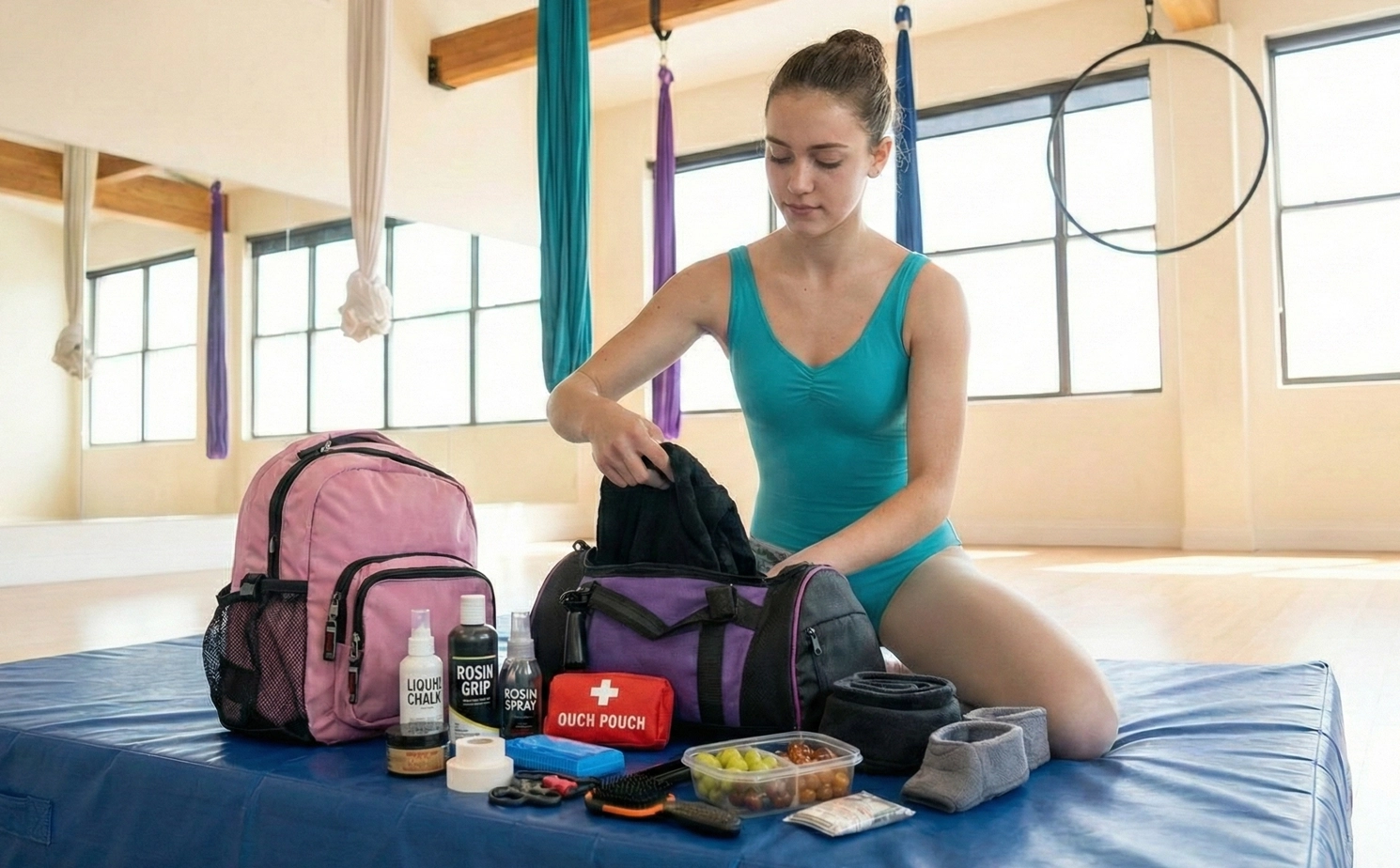
The Aerialist’s Mobile Command Centre, What to Pack in a Kids Aerial Gym Bag for Safety, Comfort, and Confidence
A parent friendly, instructor approved checklist for aerial silks, lyra hoop, trapeze, and hammock classes, including clothing, grip, first aid, and kit care.
1. Why the Gym Bag Matters in Youth Aerial Arts
Aerial training is not like a standard sports club session. Kids are climbing, wrapping, locking, and sometimes sliding on fabric or steel. That means the contents of a gym bag can directly affect safety, skill progression, and whether your child enjoys class or spends the session distracted by discomfort.
Think of the gym bag as a mobile command centre. Done properly, it reduces friction burns, improves grip consistency, keeps kit hygienic, and helps children build independence by learning how to prepare for class.
In aerial, the most common issues are avoidable. The wrong leggings, jewellery left on, hair not tied back, or no grip plan can turn a great class into a stressful one.
1.1 From Circus to Studio
Aerial arts are now widely accessible and that is brilliant, but it also means many families are new to the practical side of kit care and preparation. A clear bag routine helps close that gap fast.
1.2 The “What’s in My Bag” Trend, and Why It Actually Helps
Social posts like “What’s in my gym bag” work because they mix identity and practical value. For parents, it answers safety questions. For kids, it creates a feeling of belonging and being prepared.
2. Clothing and Friction Management
Clothing is not just about looking the part. In aerial it is part of your child’s safety system. Skin coverage reduces burns and bruising, and fabric choice changes how well kids can grip the apparatus.
2.1 Cotton vs Synthetic Leggings, the Real Difference
- Cotton rich leggings usually grip fabric better and help beginners hold locks with less effort.
- Glossy synthetic leggings can be slippery, making climbs and footlocks harder and less safe.
- Heat and friction risk is higher with some synthetics during fast descents.
Pack ankle length, cotton rich leggings, plus a spare pair. If your child trains multiple aerial disciplines, spares matter.
2.2 Coverage That Prevents Burns and Distractions
- Fitted top or leotard that stays put during inversions.
- Short or long sleeves to protect the underarm area used in many wraps and poses.
- Optional back warmer for intermediate aerial students, especially for repeated drops and rotations.
2.3 What Not to Bring, and Why
- No zips, buttons, rivets, grommets because they can snag fabrics and cause bruising against hoop or trapeze.
- No jewellery, rings and necklaces are genuine hazards in aerial.
- Hair must be secured with strong hair ties, clips, and a backup option.
2.4 Footwear Basics
- Silks and rope are usually barefoot for safe friction and control.
- Lyra and trapeze are often barefoot, but ankle protectors can help with bruising as skills progress.
- Warm up socks or booties are useful pre class in colder months.
3. Grip Aids, What They Are and How to Use Them Properly
Children’s grip strength develops over time. Grip aids are not “cheating”, but they do need to be used sensibly so kids still build strength and good technique.
3.1 Common Grip Options
| Grip aid | What it does | Best for | Parent tips |
|---|---|---|---|
| Rock rosin | Creates tack and improves friction once warmed in the hands | General grip development | Store in a sealed tub or pouch to prevent “rosin dust explosion” in the bag |
| Spray rosin | Fast tack, can feel very sticky | Occasional use on humid days or harder skills | Risk of over reliance, keep sealed inside a leak proof bag |
| Liquid chalk | Dries sweaty hands | Kids with sweaty palms | Choose small bottles with secure caps |
| Glycerin or water mist | Adds a touch of moisture and tack | Very dry hands or winter dryness | Use lightly, too much becomes slippery |
3.2 The Safety First Approach to Grip
If a child uses maximum grip products every session, their hands do less work and strength develops slower. A better approach is a baseline plan with occasional support when genuinely needed.
3.3 The Dry Hands Problem Nobody Mentions
Some kids slip because their skin is too dry, not too sweaty. A tiny amount of moisture can help. This is one of the most useful “insider tips” for parents.
4. Apparatus Specific Packing Modules
A smart bag changes depending on the class. Soft apparatus and hard apparatus have different needs.
4.1 Silks and Hammock
- Back warmer for lower back protection during repeated wraps and drops.
- Optional silicone pads for higher friction points during conditioning, only if your coach supports it.
- If carrying personal silks use a breathable bag section and follow proper washing rules.
4.2 Lyra Hoop and Trapeze
- Spare tape for hoop maintenance if your studio uses taped apparatus.
- Ankle protectors or gaiters to reduce bruising from bar contact as skills advance.
- Optional foam padding hack for conditioning comfort, used under supervision.
5. Health, Recovery, and Nutrition
5.1 Aerial First Aid, the “Ouch Pouch”
- Instant cold pack for bumps and bruises.
- Aloe gel for post training skin care, never applied right before class.
- Athletic tape and plasters for minor hand rips and hot spots.
- Ginger chews for kids who feel queasy after spins.
5.2 Snack and Hydration Plan
| When | Goal | Good options | Avoid |
|---|---|---|---|
| 30 minutes pre class | Quick energy without heaviness | Apple slices, grapes, pretzels, banana | Heavy dairy, spicy foods |
| After class | Recovery and muscle repair | Yoghurt, cheese stick, nuts if allowed, protein bar | High sugar sweets as the main option |
| Always | Hydration and grip support | Leak proof water bottle, optional electrolyte tab | Fizzy drinks before training |
5.3 Older Students, Discreet Essentials
For teens, a small opaque pouch for personal supplies reduces anxiety and avoids awkward moments, especially with flexible work and inversions.
6. Skill Tracking and Independence
6.1 The Skill Journal
A simple notebook helps children remember wrap sequences and track progress. Writing skills down reinforces learning and builds confidence when they hit a plateau.
6.2 The Packing Checklist
A laminated checklist clipped to the bag teaches kids to pack without parents doing it all. It is a small habit that builds independence fast.
6.3 Content Creation Kit
If your child likes filming, a small tripod and a portable charger help them record safely and consistently, without propping phones on unstable surfaces.
7. Hygiene and Kit Maintenance
7.1 The Quick Deodorise Spray
Some costume style items and supports cannot be washed aggressively. A light alcohol based spray solution is commonly used in performance settings to reduce odour between proper washes.
7.2 How to Remove Rosin Properly
Rosin does not shift well with water alone. A small amount of oil based cleanser can help remove residue from hands before washing with soap.
7.3 If Your Child Owns Their Own Silks
- Wash cold, delicate cycle, mild detergent.
- Avoid fabric softener, it can reduce grip.
- Air dry only, avoid high heat.
8. Buying Guide, Avoiding Unsafe Gear
The market is full of cheap lookalikes that are not tested for dynamic aerial use. If you buy equipment, you need load ratings, proper certification, and reputable suppliers.
Never trust unrated hardware. “Looks strong” is not a safety standard.
9. Making This Fun, and Building Engagement
9.1 Organisation and the ASMR Packing Trend
Clear pouches for hair, grip, and snacks look great in photos and reduce last minute stress. It also makes kids more likely to repack properly after class.
9.2 Printable Checklist and Shareable Bits
Consider adding a downloadable bag checklist for parents. It boosts time on page, increases shares, and helps the blog rank because it delivers genuinely useful value.
9.3 Personalisation That Builds Belonging
Bag charms, patches, and coloured tape choices are small things, but they make kids feel part of the aerial community and more motivated to stick with training.
10. Final Checklist, The Prepared Aerialist
The right gym bag does three jobs. It protects your child, supports consistent progress, and makes class feel calmer and more confident. If you want the simplest upgrade, start with cotton rich leggings, hair kit, water bottle, a sensible grip plan, and a small “ouch pouch”.
FAQ, Kids Aerial Gym Bag Essentials
What should a beginner wear to aerial silks or hoop?
Fitted top, cotton rich leggings that cover the knees, and hair fully tied back. Remove jewellery. Bring water. That alone prevents most early problems.
Do kids need grip aids like rosin?
Not always. Many beginners do fine without it. If your child struggles with slipping, speak to the coach and introduce the mildest option first, used only when needed.
What is the biggest mistake parents make with kit?
Slippery synthetic leggings, loose tops that ride up during inversions, and forgetting hair ties. Those three cause most avoidable issues.
Is it safe to buy aerial equipment online?
Only if it is properly rated, certified, and supplied by reputable aerial or rigging specialists. Unrated gear is not worth the risk.
Want to Try Aerial at Artists In Motion?
If you are looking for kids aerial classes in Kent, including aerial silks, aerial hoop (lyra), and aerial hammock, you can book a trial at Artists In Motion School of Dance in Aylesham.