
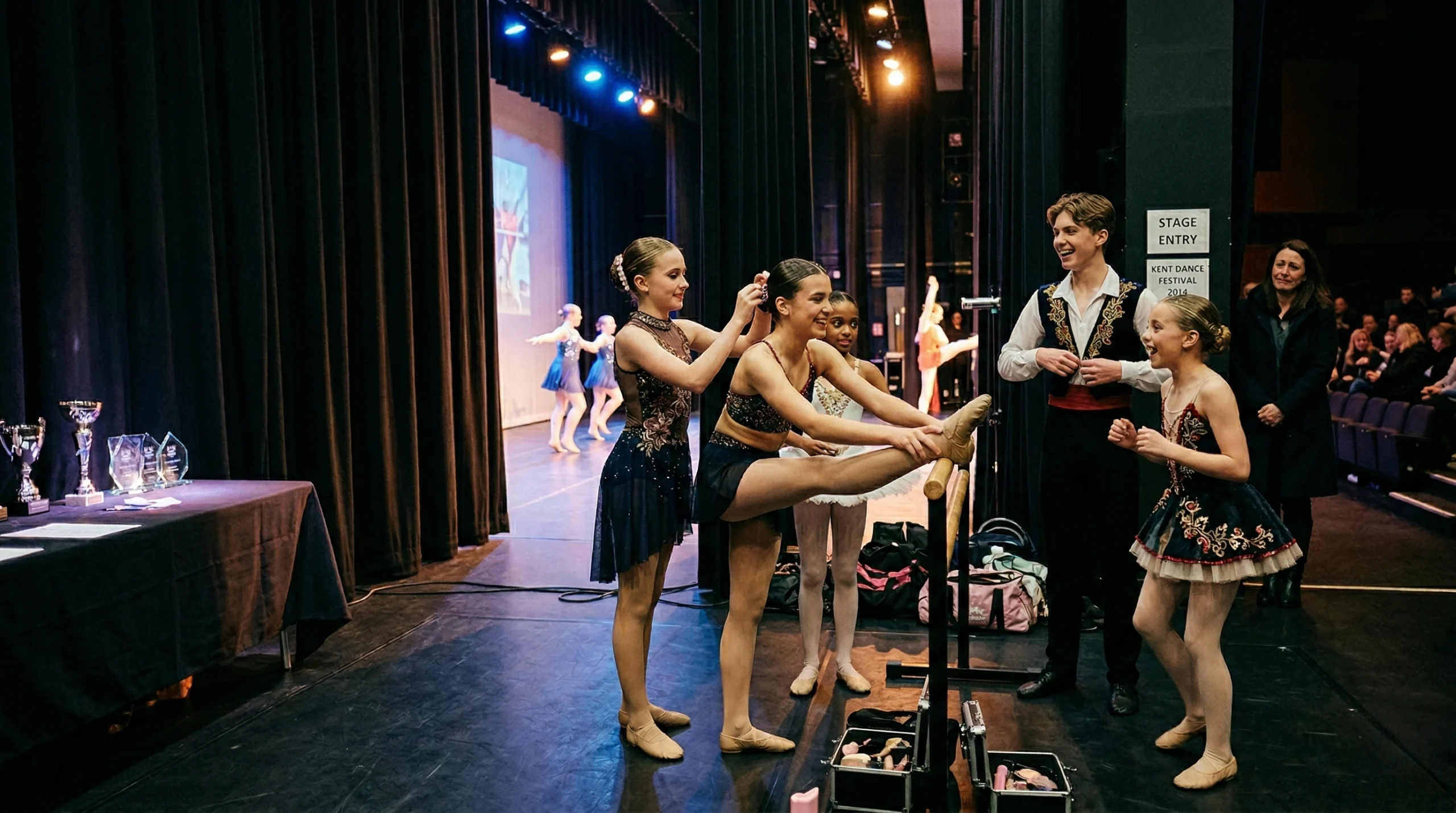
Why Dance Competitions Can Be One of the Best Things a Young Dancer Ever Does
For some dancers, one class a week is enough. For others, there comes a point where dance becomes something more, more drive, more focus, more hunger to perform, improve and be challenged. That is where competition work can completely change the journey.
Not every dancer wants competition work, but for the right dancer it can be a game changer
This is not about turning dance into pressure for the sake of it. It is about giving the right students the chance to grow faster, perform more often, work to a higher standard and discover what they are truly capable of.
At Artists In Motion, that higher-level route is represented through Troupe, a dedicated competition and performance stream for dancers who want to push further. It gives students the chance to work towards festivals, competitions and performance opportunities across Kent and the South East, while building skills that go far beyond the stage.
What competition work actually gives a dancer
A lot of people assume competitions are mainly about trophies. That is the shallow view. The real value is in what happens before, during and after the performance.
1. Confidence that is earned, not borrowed
Classroom confidence is one thing. Stepping onto a stage, under pressure, in costume, in front of an audience and adjudicators, is something else entirely. Dancers learn how to manage nerves, trust their training and perform when it matters.
2. Stronger technique and cleaner performance
When a routine is being prepared for competition, details matter more. Timing, lines, musicality, expression, stamina, spacing and polish all have to improve. That extra standard lifts the dancer.
3. Resilience and emotional maturity
Competition work teaches an important truth, you do not always win, and that is fine. Dancers learn how to take feedback, bounce back, improve and keep going. That mindset helps in dance and in life.
4. Teamwork and belonging
A well-run competition team becomes more than a class. It becomes a unit. Dancers support each other, rehearse together, travel together and learn what it means to be reliable, committed and part of something bigger than themselves.
5. Motivation with a real goal attached
It is much easier to stay focused when there is a clear reason to do so. Competitions and festivals give dancers something concrete to work towards, which usually sharpens attendance, effort and mindset.
6. Experience that cannot be faked
Performing regularly helps dancers grow in ways that rehearsals alone cannot. They learn stage craft, adaptability, performance presence and how to handle the real-world demands of live events.
Why this matters to parents, and to serious young dancers
Parents often see the benefits first, better discipline, more focus, stronger commitment, improved confidence and a healthier sense of accountability. But older dancers often feel it first. They know when they are not being stretched. They know when they are ready for more. They know when they want a school that does not just teach classes, but actually gives them real performance opportunities.
That is why a strong competition pathway matters. It creates a bridge between enjoying dance and truly progressing in it.
Competition work is not about making dance less enjoyable. Done properly, it often makes dancers love it even more, because they start to see what they can really do.
Where AIM Troupe performs and competes
Troupe dancers work towards a calendar of festivals, competitions and selected performance opportunities. That includes events in Kent and surrounding areas such as:
What makes Troupe different from a normal weekly dance class
Troupe is for dancers who want to take their training more seriously. That means showing up, applying corrections, rehearsing properly and understanding that consistency matters.
The standard has to rise when dancers are representing the school in public performance and competition settings. That brings better habits, stronger discipline and sharper results.
Students are not just learning combinations and moving on. They are preparing routines with a genuine destination, which changes the energy in the room.
Being part of a dedicated team often gives dancers a deeper connection to the school, to their training and to each other.
The honest truth, competition work is not for everyone, and that is fine
This part matters, because parents and dancers deserve honesty.
Competition work can be exciting, motivating and rewarding, but it also asks more. It asks for commitment. It asks for focus. It asks dancers to cope with nerves, pressure and feedback. Some love that challenge. Some are not ready for it yet. Some may never want it, and that is completely okay.
But for the dancer who lights up on stage, who wants to improve faster, who enjoys being pushed, who wants to perform more and who is hungry for progression, it can be one of the most powerful things they ever do in training.
Signs a dancer may be ready for a more competitive pathway
They want more than one class a week
They are not just attending, they are asking for more opportunities and looking for ways to improve.
They love performing
They are energised by being on stage and want that feeling more often, not less.
They respond well to correction
They are coachable, willing to work, and not put off by being challenged.
They are ambitious
They may already know they want to progress further in dance, musical theatre or performance in general.
For teenagers researching dance schools themselves
If you are an older dancer reading this yourself, here is the simple version. If you feel like your current training is too comfortable, too limited or not giving you enough performance opportunity, that feeling is probably there for a reason.
A stronger dance school pathway should challenge you. It should give you goals. It should make you work harder. It should also make you better. If competition work is something you want, you should be in an environment that takes it seriously.
Frequently asked questions about dance competitions and Troupe
Are dance competitions too intense for children?
They can be, if they are handled badly. In the right environment, they are structured, supportive and incredibly valuable. The focus should be on development, teamwork, confidence and standards, not unhealthy pressure.
Do competitions only matter if a dancer wins?
Not at all. Winning is a bonus. The bigger value is in preparation, performance experience, feedback, resilience and growth.
Can competition work help with confidence?
Yes, often massively. It helps dancers manage nerves, trust themselves on stage and become more comfortable performing under pressure.
Is Troupe only for the very best dancers?
It is better to think of it as a higher-level pathway for dancers who are serious, committed and ready for more. Ability matters, but attitude, coachability and commitment matter too.
Can older children or teens join if they want a more serious pathway?
Yes, this is exactly the kind of dancer who may benefit most, especially if they are actively looking for stronger performance opportunities and a more challenging environment.
Looking for a dance school with a real performance pathway?
Whether you are a parent exploring the next step for your child, or a young dancer looking for a school that offers more than standard weekly classes, Artists In Motion could be the place to start. Troop is designed for dancers who are ready to push further, perform more and grow through real competition and festival experience.
Speak to Artists In Motion Explore AIM classes